Thursday, 27 October 2011

My question for Mr Webb at the NAPF Manchester Conference

And so to Manchester for this year’s NAPF Annual Conference. It will be my second after last year’s Liverpool event and I see that some of 2010’s star turns will return for a second show. Amongst them is Steve Webb the Pensions Minister who was praised in some quarters last year for actually knowing something about the subject. Compared with many of his predecessors it may well be the case that Mr Webb had a head start when he took the job – a former University Professor no less. But still engrained in my memory was Webb’s misleading statement at Liverpool that CPI is a better measure of inflation for pensioners than RPI. We all know why he said this, of course, and we are familiar with his argument that the exclusion of mortgage interest payments from the CPI does make it more appropriate as most pensioners no longer have a mortgage. But, as he should know, mortgage payments are just one component and other housing costs, notably Council Tax which most pensioners certainly do have to pay, are not in the CPI either. But the real source of irritation for me and others about Webb’s statement was summed up by Param Basi, the Technical Pensions Director at AWD Chase de Vere, who said "The argument that CPI is a more appropriate measure does not stand up when you consider that pensioner inflation is recognised as being higher than RPI anyway. This change will have a double whammy impact on pensioners’ real incomes."

For the Trustee trying to act both honourably and responsibly in these febrile times is extremely difficult. When a Government Minister makes a claim which is self-evidently disingenuous surely we should express our concern? As John White showed in the July “Pensions Age” the switch from RPI to CPI really does mean that for virtually all Fund members currently in employment their retirement pensions will be lower. And for deferred members who leave a scheme early the fact that their pension accrual will now use the CPI between the date of their leaving a scheme and the date of their retirement will lead to a very substantially lower initial pension as well. I have a personal rule of thumb to guide me in this and in other contentious Pensions matters. If the members of the Pension scheme of which I am a Trustee will be disadvantaged by any proposed changes then I’m in principle against them! This may sound a little precious, and my scheme is not doing it anyway, but were I to be a Trustee of a scheme which planned to replace RPI with CPI I’d be up in arms in protest.

David Willetts, Minister of State for Universities and Science and a speaker at last year’s NAPF Investment conference, has as the subtitle of his book “The Pinch” “How the baby boomers took their children’s future – and why they should give it back”. This is jokey (I think) but Willetts, who is currently ten years from drawing his own Pension, perhaps consciously reveals an attitude of mind that is prevalent in Government today. To paraphrase Harold Macmillan this attitude is that the baby boomers have “had it too good” and what wealth we may have accumulated over our forty or so years of employment is a legitimate target to attack for the Government as it tackles the deficit. A major component of that wealth for most of us is of course our accumulated occupational pension entitlement. So when a pensioner’s annual increase in a public sector or private Pension is switched from RPI to CPI it actually has the effect of reducing his wealth - and for many this offends against natural justice. The key point here is that the legislation is retrospective in effect. Throughout a baby boomer’s employment years he and his employer contributed on the assumption that on retirement he would have an inflation proof Pension generally linked to RPI. To change that may be legal – I am sure that the Government lawyers will have seen to that – but surely it isn’t right?

So what will be my question to Steve Webb at Manchester? It will be in two parts. First does he agree that the problem for all public and some private sector pensions is the abject failure of Pension providers to make adequate provision for the future over the comparative years of plenty in the 1990s and 2000s? Secondly given that failure is it fair to penalise present and future pensioners by significantly reducing their wealth? I might wear my “I agree with Nick” T-Shirt when I ask the question – but probably not!

Paddy Briggs is a Member Nominated Trustee of the Shell Contributory Pension Fund. He writes in a personal capacity.

Paddy Briggs

September 2011

Wednesday, 14 September 2011

Rethinking the Pensions paradigm

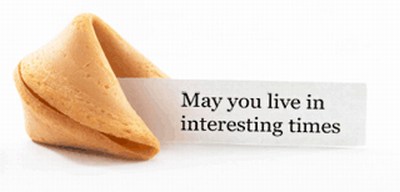
The Chinese curse is "May you live in interesting times" - and that curse seems dramatically to be with us at the moment. At the risk of stating the obvious the Pensions world is at the crossroads and we have reached that point not when there is calm in the world around us (allowing measured reflection) but when there is at best uncertainty and at worst chaos. Pensions, a subject that in the past rarely made the media at all, is currently front-page news. And yet for all the ubiquity of the coverage I have yet to see much discussion of what may eventually turn into a need for a radical redefinition of the role of the Trustee. That role could become one which includes not just the need to protect the interests of Fund members but also to monitor the moral obligation that employers have to ensure that all their employees a have properly funded retirement.

About fifteen years ago, when I was in the last quarter of my career with Shell, the company produced a helpful booklet about Pensions. This communication explained that I would enjoy a pension equal to 1/54th of final pensionable salary for each year of service meaning that, as a long serving employee, I would have a high degree of financial security in my retirement years. The scheme was in line with most public and private sector Defined Benefit schemes in what it offered. To live on a Pension of say 70% of a final salary, revised annually in line with the Retail Price Index would be unlikely to cause too much hardship! And the then completely uncontroversial premise was that the employer has a duty of care to its employees which extended into and throughout retirement.

The situation described in the above paragraph seemed pretty much cast in stone for most European businesses until, over the past decade or so, for many schemes the foundations began to rumble. Businesses - often influenced by the very different paradigm in the United Sates - began to wonder whether they were really getting value for the pensions commitments they made to their staff. And the staff put funding their retirement even lower in their checklist of priorities than it had been in the past. Jam today became the order of the day driven by escalating property prices that meant that salary now to fund bricks and mortar became the imperative - and the future could take care of itself. So when Blue Chip companies began to close their Funds to new entrants it met with little resistance from the newly recruited. When you are 25 where you might be financially in 40 years time is not top of mind - putting yourself in a position to maximise your earnings now is the order of the day. This has led to a sort of collective apathy to the benefits of good quality pensions and it is this apathy which has led to the decline of DB pension schemes. As a consequence, as recent research has revealed, 70% of adults aged between 22 and 64 have no idea how much they are likely to retire on.

The old pensions paradigm was that saving for retirement was essential and that employers had an obligation to make contributions to pension accrual. This model may have broken down – but the reality remains that in retirement everyone needs an income stream and that the State Pension, helpful though it is, will not be sufficient for many. Government policy changes like Auto-Enrolment - along with, of course, the tax advantages attached to Pension schemes, tries still to encourage saving for pensions. But a significant minority of the population does not save at all and can expect no income other than the State Pension and perhaps welfare benefits unless they do something quickly.

In these rapidly changing circumstances could it become a part of the Trustee’s role not just to protect Fund members but also to have an overview of all employees’ interests – including those who cannot be members of a closed DB Pension scheme? This role redefinition would require Trustees to have an input into a Sponsor’s remuneration policy with a view to encouraging and enhancing elements of compensation that help employee retirement welfare – such as sharesave, tax wrappers like corporate ISAs and of course, the provision of a good DC scheme.

Paddy Briggs is a Member Nominated Trustee of the Shell Contributory Pension Fund. He writes in a personal capacity.

Pensions Fund communications in the internet age

Pensions Funds are not famous for their brand management – indeed I suspect that few would even consider that they are brands at all. But they are – and this has important implications for how they communicate - and indeed for how they behave. Obviously a Defined Benefit Pension scheme’s brand is in most cases inextricably linked to that of its sponsor - but the sponsor’s brand is not the same as the Fund’s and it is a communications challenge is to ensure that this is understood by members. Decisions taken by the Pension Fund trustees are NOT decisions taken by its sponsor and although that important distinction may not be understood by all Fund members it really needs to be.

The main challenge is for Trustees to give their Fund a distinctive identity separate from that of their sponsor. This means that they need to emphasise that the management of the Fund, and especially changes made to it, are changes taken by Trustees not changes imposed by the sponsor. In a well-run Fund with good sponsor relations this is unlikely to be a problem. But if a Fund gets into difficulties this does become much more challenging – especially if the sponsor is pushing the Trustees hard to agree to changes to the Trust Deed that will reduce its (the sponsor’s) financial liabilities or risk. Trustees have by law to act in the interest of the Pension Fund’s members but this can lead to tensions in times of difficulty - such as when a Fund is heavily in deficit and a recovery plan is in place. In the past it was much easier for a determined sponsor to push through major changes - such as a closure of a scheme to new entrants or even the stopping of further accruals for actives.

Modern communications, including social networking, gives those opposed to Pension Fund changes the opportunity to campaign effectively. For example in the British Airways pension scheme three trustees recently resigned from their Board in protest against a proposed RPI to CPI indexation change. These three ex-trustees continue their campaign in the Pensioner interest and are active in the independent “Association of British Airways Pensioners” (ABAP) where they use brand and communications techniques skilfully to fight their case. The ABAP has a website as a communications tool and they also have professional looking video clips on YouTube and pages on Facebook. The creation of a professional looking website is straightforward and costs very little. I doubt that the very good looking ABAP website at http://www.abaponline.org/ cost much to create and run but it works well. In the modern world of communications such common interest group alliances can be built and supporters can be kept informed quickly and cheaply. The ubiquity of modern communications is such that Sponsors and Pension Fund Trustees will have extra pressures on their shoulders and fewer places to hide!

Whilst activists have modern communications tools at their disposal so of course do Trustee Boards and they certainly need to respond to these changing communications realities. If it is competently done a Pension Fund can benefit from this rapidly changing communications environment and need not feel threatened by it - but to do this they first need to accept that the old ways of doing things just won’t work anymore. All communications to members need to be well designed, non-formulaic and digestible with the key facts and issues openly presented. And the style must be such that two-way communication is encouraged. The web is ideal for this and any Fund’s website should ideally include (inter alia) a forum to which members can make a contribution if they wish. The content and visual appearance of a Fund’s website, and navigation around the site, needs to be judged in the context of Internet best practice - it should be designed not just to inform but to enhance the Pension Fund’s brand and build members’ confidence in it.

The old days of Trustee Boards being perceived unquestioningly by members as acting in their interest have gone. The new reality is that a Board’s duties include that of managing the perceptions of its members - and they should also anticipate that there could be organised and professional opposition from activists to any changes that can be presented as not being in members’ interest. In these circumstances Boards need a highly professional approach to communications and the use of all of the modern brand management tools.

Paddy Briggs is a Member Nominated Trustee of the Shell Contributory Pension Fund. He writes in a personal capacity.

Tuesday, 28 June 2011

A time for thick skins and challenging minds

When I started work in the 1960s, and throughout most of the rest of my Shell career, the basis of my remuneration was comparatively simple. I did a job. That job had a value to the organisation expressed as a "Grade" and that Grade had a salary range attached to it. I was paid within that salary range and then if I moved to a higher graded job I was paid more. Occasionally - very occasionally - I received a modest bonus perhaps roughly equivalent to one month's salary. In addition I benefited from being part of a Defined Benefit Pension scheme to which I contributed, as did my employer. The receipts from this scheme were of course deferred until I retired and started to draw my pension - essentially this retirement benefit was remuneration deferred from my employed days. This was the traditional model common across the world of work and reflective of the then tradition of most of us having only one employer over our lifetime - and of an assumption of a duty of care on the part of the employer not just during the working years but into retirement. In the last couple of decades this model has broken down and whilst it still exists the changes in social and business attitudes of modern times have profound implications for pension fund trustees.

As I have written here before the closure of DB schemes to new entrants is in part recognition that the modern "compensation" package with, for some, its much higher and non-pensionable bonus element does not need to value pension provision so highly as in the past. It must also be true that in a period of high unemployment young people, especially graduates, are grateful for having a job offer at all - the lack of the provision of a Final Salary pension in their package is unlikely to be an issue. And for today's employers the paying of remuneration now, and with a high performance related element, seems much preferable to the creation of the long-term financial burdens that the provision of pensions for employees involves. It is also the case that the norm now is for individuals to have more than one employer over their working life - many more in most cases. Surely the norm for the future will be fully transferable money purchase pensions schemes rather than the DB (or DC for that matter) scheme based on a "single lifetime employer" assumption. So what is the Trustee role when a company decides to close a scheme to new entrants i.e. to change the basis of its compensation offer? I would argue that it is minimal. Trustees should certainly question a sponsor as to whether such a decision is in any way a weakening of the sponsor covenant. But that it about it - the Trustees duty of care is to scheme members and by definition an employee outside the scheme is not a member.

But, of course, it is not just the closure of schemes to new entrants that is underway at the moment. Take, for example, Unilever's recent decision to close its final salary DB scheme to further accruals. Although pensioners and those close to retirement age will not be affected (or will only be slightly disadvantaged) for the employee in mid career the decision must have come as a bombshell - after all this is a company that made over £5billion profit last year. As the Pensioners' Alliance Chief Executive said "This is pretty bad news for someone at Unilever who is in their mid 40s and had expected a certain level of Pension". Indeed it is! As recently as October 2010 the Chair of Trustees of the Unilever Fund said to the fund's members, in good faith I'm sure, "… it is our ongoing belief that Unilever has a strong commitment and ability to support the [Pension] Fund into the future"!

It is in circumstances like those at Unilever that the role of the Trustee becomes crucial and the need for independence of thought and attitude becomes paramount. Similarly if a Private Sector scheme decides to follow its Public Sector cousins and opt for the use of CPI rather than RPI for annual increment increases for pensioners, as some quite large schemes have done recently, the Trustee must challenge the rationale for the change and ask for alternatives to be considered. Easier said than done if you have a powerful sponsor determined to make a change.

Arguably the role of the Pension Fund Trustee has never been more important than in these febrile times. Thick skins and challenging minds required!

A Trustee’s role in a Fund’s investment strategy

A not uncommon reaction from friends when it emerged that I was a candidate to be a Pension Fund trustee was “I didn’t know that you were interested in investment, Paddy?” The implication was that the big deal for a trustee was involvement in the management of the Fund’s Asset portfolio – that’s where the action was. A couple of slightly cynical acquaintances even said when I was elected “Well that should help you sort out your personal investment portfolio” and when I said that I didn’t have such a thing they looked at me with amazement – must be the friends I keep! That maintaining and increasing fund value is a key role of a trustee I happily accept but for me to immerse myself in the minutiae of investment tactics - I don’t think so.

So what is the role of a non-professional trustee on a DB scheme’s Board with regard to investment? I think that above all it is to look at the subject from a fairly high level strategic perspective. The liability side of a Fund’s standing at any one time changes fairly slowly and is very assumption based. For example longevity and discount rate assumptions are just that – assumptions. Because they deal with future events, and because by definition the future is uncertain, they cannot be seen as factual - but all too often they can become unrealistically regarded almost as hard data. So, for example, discount rates based on bond yields can steer pension fund asset allocations towards bonds in an attempt to reduce volatility and improve the future prospects of the funding level - however this can be at the cost at the cost of potentially producing much lower long-term asset returns. The risk is that assumptions, which are very soft data, can distort asset allocations which can even lead to a delusionary perspective of the health of a fund. We all operate in the present and for some Trustees there may be a bias towards caution. If a Fund’s valuation at any one time can be seen to be more predictive of a healthier future by increasing the proportion of the liability driven element in the asset side this can be attractive to a risk-averse Trustee.

So in looking at investment strategy the Trustee does need to understand liability assumptions and not be over-influenced by them. Clearly a vehicle which locks in returns with a high degree of certainty - for example by using bonds with their dependable cash flows - can be useful for part of the portfolio. If this part of the asset base is notionally allocated to the meeting of current and short and medium term pension payment obligations that can be enticing. The rest of the fund can be allocated to investments with a longer time horizon - principally Equities in most cases. It is at this level of abstraction that I think Trustees should be operating – the principles of portfolio structuring taking due regard of the actuary’s liability forecasts. But it is worth remembering that every pound that is locked up in a liability driven investment vehicle is a pound that is not available, except at a cost, for other asset classes. There is a trade-off between on the one hand locking in returns and on the other hand keeping all the investment options open. And as is always the case the Actuary should be challenged – not to disagree with his assumptions but to request him to disagree with himself by running sensitivity analyses!

The Trustee’s role then is to avoid the detail of investment decisions, to try not to second guess the investment managers and to review performance at a fairly high level of summation. This means, ironically, that although Pensions conferences can be valuable for Trustees (more should go to them) many of the exhibition displays at these conferences by the investment community are not really for them. Trustees should not really be engaging in conversation with the earnest investment managers in their smart suits and with an impressive City addresses on their business card! What is, however, in my view firmly in the domain of the Trustee is to reflect that he is not only concerned with the metrics of the Fund’s investment but also with its integrity. The difficulties that some big name DB schemes have got into in recent years has tended to disguise the fact that most DB schemes remain adequately funded with good sponsors and reasonable prospects of discharging their liabilities over time. These funds are very significant players indeed in the world of finance and investment and they can also be a force for good in it. So for funds to invest ethically and especially to make investments in the new “social investment” asset class is something that Trustees should in principle support.

The changing role of the Trustee as DB schemes mature

Twenty years ago the Pension Fund of which I am a Trustee had 44,315 members of which 34% were Actives, 51% Pensioners and 15% Deferred members. Today the Fund’s total membership is numerically almost identical – 44,482 - but this membership is split very differently. Only 14% are Actives, 66% are Pensioners and 20% are Deferreds. Every Pension Fund is different but the trend in mature funds away from Actives to Pensioner members, of both types, is clear. In Shell in the UK the factors included a changing business model which meant a significant reduction in labour intensive business sectors and an increasing tendency to contract out areas of the business to third parties for whom there was no Pensions liability. This trend will continue and the situation where Pensioners represent close on 90% of the total membership of the Fund is not many years away. If a Defined Benefit scheme is closed to new members or closed to future accruals for its Actives (neither is currently the case for Shell) then the significance of the Pensioner membership as a percentage of the total will increase further. What are the implications for Funds, from a Trustee perspective, of this radically changing membership composition?

Trustees of mature funds, in which the number of members receiving pensions far exceed those still working, must take account of these changes both in the “hard” aspects as well as the soft. By hard I mean issues to do principally with the sponsor’s covenant and with funding ratios. When Pensions Funds were first set up in most cases on day one of the fund’s existence 100% of the membership were Actives. Gradually, of course, this changed and at some point the fund’s annual contribution receipts (Employer and Employee contributions related to Actives) became overtaken by the outgoings – the benefits paid to Pensioners. From this point on the nature of the Fund began subtly to change. No longer was the Fund primarily a tool for attracting and retaining staff. Instead it became an increasing actual or potential burden on the sponsor – there is no need to recall here the dramatic effect this had on some famous sponsors with, in some cases, the Company’s Pension Fund turning into an albatross which imperilled the whole business! The scandal of these cases was that we are not talking about an overnight event which suddenly turned a well-funded Pensions scheme into one with a hugely negative funding ratio. What we are talking about is culpable neglect on the part of Trustees who did not see the signs of a deteriorating position, or of Sponsors who didn’t do anything about it. You can model fund membership composition changes and test this on the future financial health of the Fund in “what if” scenarios – there is no excuse for Trustees who do not insist that this happens.

The “Soft” issues to do with the change in the balance between Actives, Deferreds and Pensioners include Board composition, communications and the general perspective of the fund that Trustees should have. Pensioner members will want to be able to rely on Trustees to protect their interests – not that these are especially complicated. In essence Pensioners need reassurance that their fund is being properly managed so that the income stream on which their retirement is predicated is reliable. When changes occur – for example if schemes close their doors to new members or stop further accruals for Actives – this is a good time to reassure Pensioners that their own positions are unaltered. A practical way of showing that the Trustees understand the changing nature of the Fund would be to give Pensioners greater representation on Boards. And a mature DB scheme becomes much less an element in employee compensation, and as such a responsibility of the Sponsor’s Human Resources Department, and much more takes the character of a stand-alone investment business for ex staff providing benefits to which, of course, they are fully entitled! The relationship with the sponsor also changes in a subtle way. In the past the Pension Fund’s funding by the Sponsor was a pragmatic way of keeping employees happy. Now it is a duty and a legal obligation but without any concomitant benefits of employee loyalty or staff retention. Loyal and contended staff can add to the bottom line – loyal Pensioners make no such contribution!

Trustees have a duty of care to all of their Fund’s members and must not discriminate between the member classes. But this doesn’t mean that they should be unaware of the member composition changes that are underway – many of the priorities of a closed mature fund are likely to be very different from that of a Fund with a high proportion of Actives and which is still open to new members.

Tuesday, 1 March 2011

A response to Mercer’s Trustee survey

A recent survey by Mercer of 119 Pension schemes and 800 trustees revealed that around one third of trustees monitor the sponsor covenant only annually - or even less frequently. The integrity of the sponsor covenant is essential and I am surprised that any trustee could believe that the job can be done without monitoring it closely. However we do need to make a distinction between having a regular (e.g. annual) process which includes an element of sponsor challenge on the one hand and the more informal but continuous “keeping an eye” on the Sponsor’s business performance and their attitude to the Pension fund on the other. In the past it seems that many funds watched their funding ratios gradually PA Mar 11decline but were reluctant sufficiently to challenge sponsors to rectify matters. Funds do not usually go from being healthy to being in trouble overnight. An important part of the “monitoring the covenant” duty is for trustees to look closely at risk and to request the carrying out funding ratio sensitivity analyses which forecast the effect of various key variable changes – both on the investment and the liability side. For example a trustee could request that a case in which more “pessimistic” longevity assumptions are made be actuarially quantified - and then challenge the sponsor as to what their reaction would be in such circumstances? This is what I would call “active monitoring” of the covenant as opposed to the passive monitoring which some trustees may see as sufficient.

In Mercer’s survey it was also revealed that in less than half of the schemes surveyed was there formal trustee performance evaluation. In my view such evaluation is desirable – so long as it focuses not just on knowledge but also on suitability. It would be wrong to start an evaluation exercise from the assumption that the only thing that trustees need in order to be effective is to be knowledgeable on all aspects of Pension Fund management. They don’t, so long as across the Board as a whole, and including external advisors, there is sufficient knowledge. Far more important for a trustee is the need for an enquiring mind and preparedness to challenge the conventional wisdoms - trustees must not be shy retiring violets! Evaluation needs to concentrate as much on personal qualities and attitude as on pensions specific knowledge.

Another subject on which Mercer reported was that of trustee remuneration. 37% of funds pay some or all of their non-professional trustees according to the survey. As an unashamedly amateur trustee I fully accept that external professional trustees on a Board should be paid but, in my opinion, other trustees should not be remunerated. I totally disagree with Mercer’s conclusion that nominal pay (or no pay) leads to trustees being perceived as amateurs “serving for altruistic reasons”. Indeed I would go further and say that at least some trustees on any Board should be amateurs - and I see absolutely nothing wrong with altruism! I am a trustee solely for altruistic reasons – I want somehow to protect/improve the lot of my Fund’s members. That’s what I am there for and I would prefer it that I and all my fellow trustees worked entirely voluntarily. If this sounds like a pro “Big Society” argument then so be it – perhaps it is! I agree that trustees should be of the “right calibre”, as Mercer put it, but do not think this means that it is a job like any other job that people do only because of the money they can earn - nor that this pay should be linked to some spurious measure of “performance” as Mercer also seem to want.

Finally Mercer’s survey reports on the composition of Boards and reveals that 48% of schemes apply some measure of selection for trustees. Ideally I think that Boards should be as diverse as practicable and that members should have a say in who represents them. Whilst I like the concept of the expert and objective “Independent trustee” I fundamentally object to the policy that some Boards seem to have introduced that “selection” should replace “election” for all trustees. A mix between “appointed/selected” on the one hand and “elected” on the other seems desirable and this is what I am used to. Justice has to be done and to be seen to be done and to have some Trustees elected by the various member groups will help ensure that this is the case.


Paddy Briggs is a Member Nominated Trustee Director of the Shell Contributory Pension Fund. He writes in a personal capacity and the views he expresses are his own.

© Pensions Age